The Powhatan Indians
The Chesapeake Bay Region’s Native Americans
At the time European settlers arrived in the Chesapeake Bay area, the region was occupied by approximately 13,000 to 14,000 Powhatan Indians. The Powhatan settlements were concentrated along the rivers, which provided food and transportation.
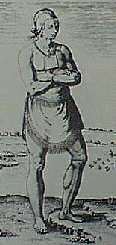
The ruler of the Indians in this area was Wahunsonacock, who was commonly referred to as “Powhatan.” John Smith described Powhatan as “a tall well proportioned man, with a sower look, his head somewhat gray, his beard so thinne, that it seemeth none at all, his age (as of 1608) neare sixtie, of a very able and hardy body to endure any labour.” Powhatan had a large family, consisting of over 100 wives and many children. The most famous of his children was a daughter named Matoaka, better known by the nickname “Pocahontas.”
At it’s peak, the Powhatan nation included over 30 tribes. Each tribe was lead by it’s own chief who paid tribute to Powhatan. Powhatan’s people farmed as well as hunting and gathering food.
Although early interactions between the English and the Powhatans was sometimes violent and exploitative on both sides, leaders of both peoples realized the mutual benefit to be derived from peaceful relations. The marriage of Powhatan’s daughter, Pocahontas, to settler John Rolfe in 1614 ensured a few years of peace. However, with the death of Pocahontas in 1617 and the death of Powhatan a year later, the peace came to an end.
In 1622, lead by their new leader, Opechancanough, the Powhatans staged an attack on English settlements throughout Virginia. The settlers retaliated and waged an all out war on the Powhatan people. For over a decade, the English systematically razed villages, seizing or destroying crops, killing men and women, and capturing children. The English expanded their empire as the Powhatan empire declined. In 1644, Opechancanough rallied his people for a final attempt at forcing the English off their land. Hundreds of colonists were killed, and Opechancanough was captured by the English and shot. Finally, treaties were made with Opechancanough’s successor, severely restricting the Powhatan people’s territory and confining them to small reservations. By 1669, the population of Powhatan Indians in the area had dropped to about 1,800 and by 1722, many of the tribes comprising the empire of Chief Powhatan were reported extinct.
More Information
- Virtual Jamestown’s Powhatan page
- Powhatan Indian Village – Jamestown
- The Pocahontas story